.png)

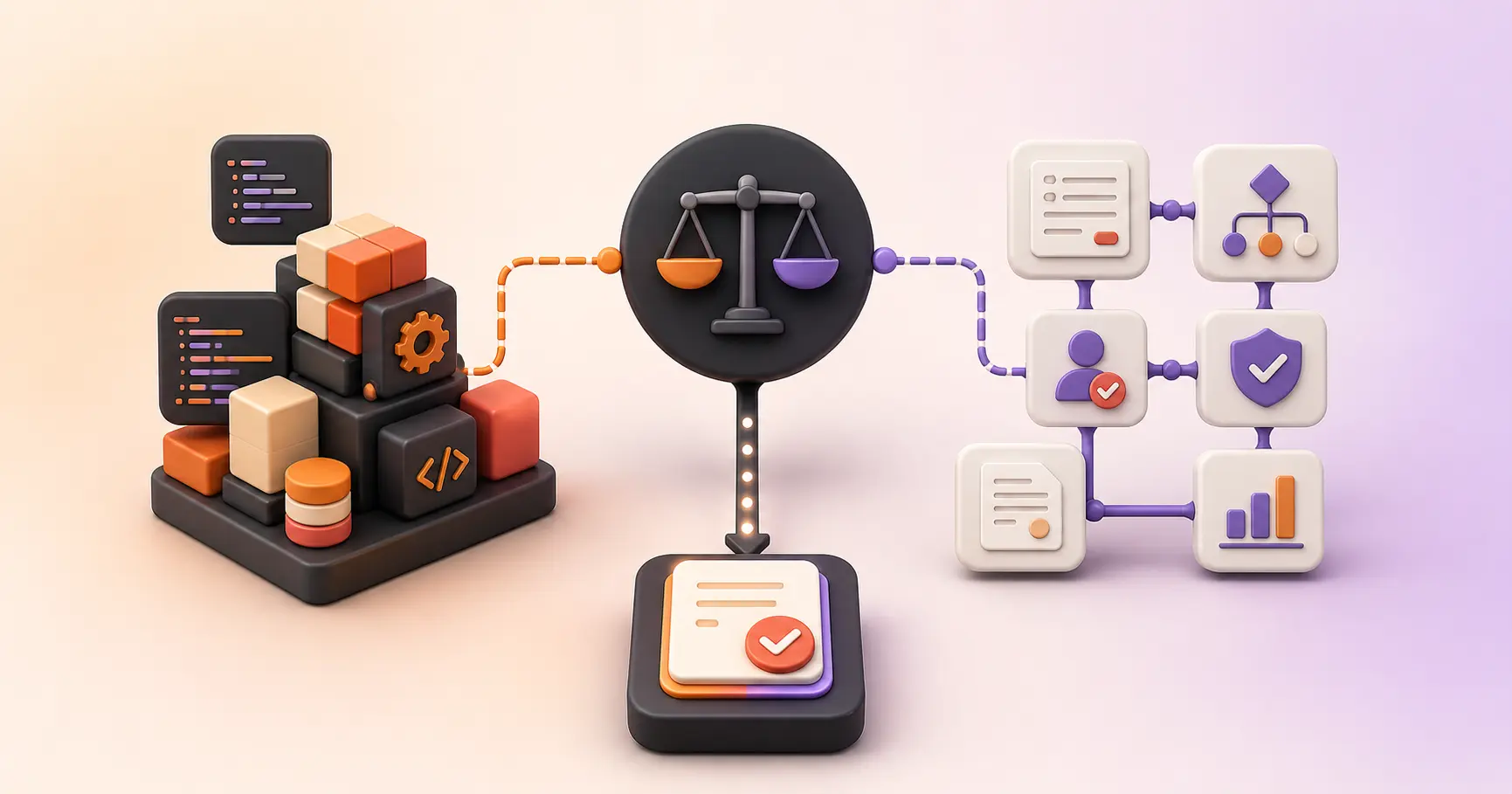
Use workflow software when the main problem is coordinating people, records, decisions, and states. Use RPA when a stable, repetitive task must operate through a user interface and no suitable API exists. Use custom development when the capability is strategically distinctive or the requirements justify ongoing engineering ownership.
Many enterprise systems combine all three. The mistake is choosing one category for the entire process before identifying what each step actually needs.
Source review: August 28, 2026. Product capabilities and plan availability can change; verify requirements with each vendor. This guide is not procurement, security, or legal advice.
Define the three delivery models
Workflow software
Workflow software models records, roles, forms, rules, states, approvals, notifications, views, and integrations. It fits work that moves between people and systems and needs visible ownership.
Robotic process automation
RPA automates actions that a person would perform through desktop or browser interfaces. Microsoft describes desktop flows as a way to automate repetitive desktop processes. RPA can bridge a system that lacks a practical API, but the automation depends on the interface and environment it operates.
Custom development
Custom development creates software for requirements that standard platforms cannot meet well. It gives the organization control over architecture and behavior while creating responsibility for design, testing, security, deployment, support, and change.
Compare the options on nine factors
- Nature of the work: Human coordination favors workflow software. Stable screen actions favor RPA. Distinctive product behavior may favor custom code.
- Rule stability: Frequently changed business rules need an operating model that authorized owners can inspect and maintain. UI scripts need stable screens. Custom code needs a release process.
- State and case management: If every request has an owner, status, evidence, deadline, and exception history, make the workflow layer explicit.
- Integration surface: Prefer supported APIs or webhooks when available. Use RPA selectively where an interface is the only workable connection.
- Exception load: High variation and judgment usually require visible case handling. A bot that only works on the happy path can move failures out of sight.
- Change ownership: Decide whether operations, a platform team, an automation team, or software engineering will own future changes.
- Control requirements: Map access, segregation of duties, evidence, testing, monitoring, and recovery to the actual architecture.
- Strategic differentiation: Build custom software when the capability itself creates meaningful advantage, not merely because a team can code it.
- Lifecycle capacity: Compare the ability to operate and improve the system after launch, not only the effort to build version one.
Use workflow software for stateful human coordination
Choose a workflow platform when the operating problem looks like this:
- people submit structured requests and supporting evidence;
- rules determine routes, reviewers, deadlines, and actions;
- operators need queues, statuses, assignments, views, and notifications;
- decisions require records and controlled visibility;
- business rules will change and must remain understandable;
- the process connects to other systems through supported interfaces.
A workflow platform should not become a disguised custom application for every edge case. Check the enterprise workflow software requirements before selection.
Use RPA for bounded interface work
RPA can be practical when a required legacy system exposes no suitable API and the screen sequence is stable. Examples include transferring a defined set of values, retrieving a document, or running a repetitive desktop action.
Keep the workflow system responsible for the case state. Give the bot a bounded task and a clear result: succeeded, failed, or needs review. Record the input, output, run time, and error. Route failures to an owner rather than allowing the workflow to wait indefinitely.
Test screen changes, permissions, timeouts, duplicate actions, and partial completion. Maintain a manual continuity path. RPA is an integration technique, not a substitute for process ownership.
Use custom development for justified uniqueness
Custom code fits when requirements are central to the product or operating advantage, platform constraints block essential behavior, performance needs are specialized, or the organization must control the technical architecture in ways a configurable product cannot support.
Document what must be unique. Then estimate the full lifecycle: discovery, design, testing, security, observability, deployment, support, data migration, documentation, and change. The build-versus-buy guide provides a deeper evidence model for that decision.
Design a hybrid architecture by responsibility
A useful hybrid pattern has four layers:
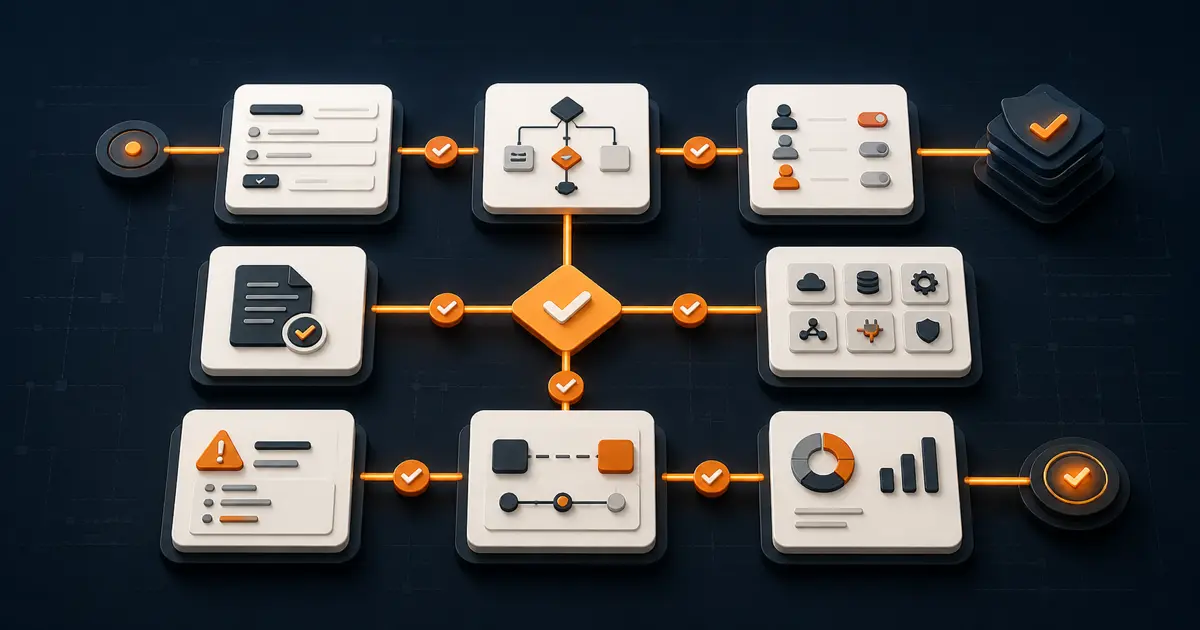
- Workflow layer: Own the case record, state, assignments, human decisions, deadlines, and operating views.
- Integration layer: Exchange data through APIs and webhooks wherever practical.
- RPA layer: Perform a narrow UI task for a system that cannot integrate another way.
- Custom service layer: Provide distinctive logic or processing behind a controlled interface.
Give each layer an owner and an observable contract. If a custom service or bot fails, the workflow should show the affected case and its recovery state.
How Formaloo fits the workflow layer
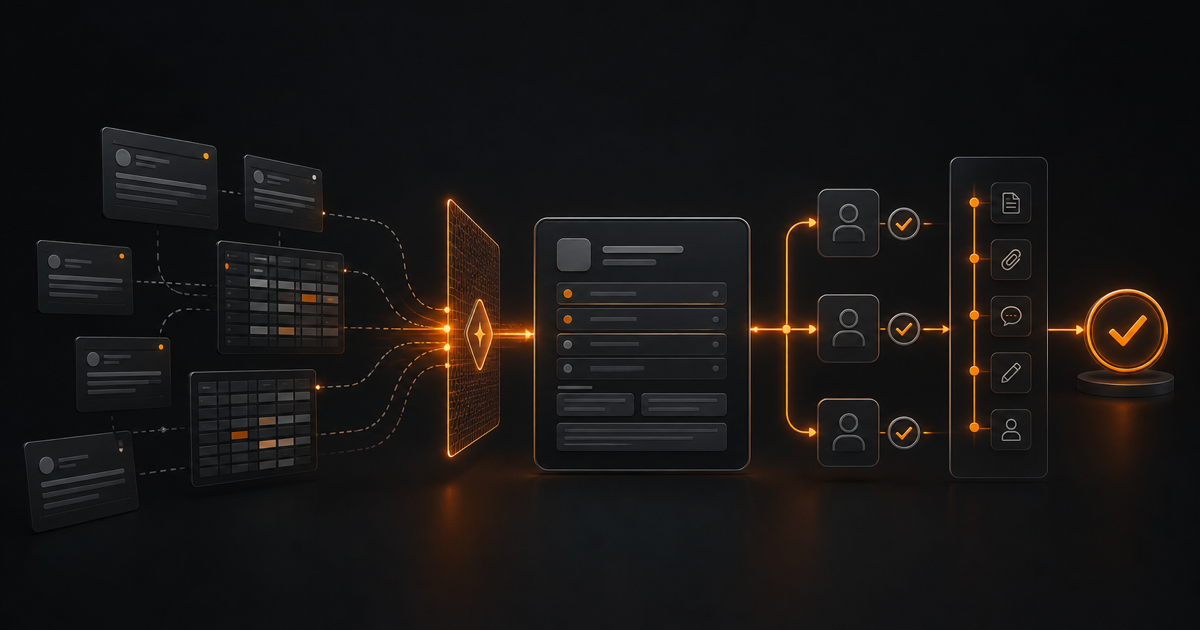
Formaloo can structure records with forms, use logic to route work, manage assignments and statuses where configured, provide operational views with Data Blocks, and connect systems through webhooks. Validate each required capability and plan during evaluation.
Formaloo OI brings collection, understanding, and action into one operational system. Formaloo also offers a forward-deployed approach for enterprises that need help turning cross-functional requirements into a deployed system. That does not remove the need to choose the right architecture. It gives the organization a delivery path when platform configuration and operational redesign must happen together.
Run a proof around the hardest requirement
Do not prove only that a form can be submitted or a bot can click through one screen. Test the hardest evidence-backed requirement: a disputed exception, unavailable approver, changed source record, partial integration failure, permission boundary, or version change.
Record the result against the nine factors. The right choice is the model your organization can operate safely as the workflow, systems, and policies change.
Choose the right delivery model for your workflow
If you want to evaluate workflow software, integration, and forward-deployed support around a real operational process, book a Formaloo demo.